
Acquiring a commercial property represents a monumental milestone for any business, investor, or development group. It is a major enterprise that involves significant capital deployment, long-term strategic planning, and a substantial amount of financial risk. To safeguard this investment properly, buyers must look far beyond the initial visual appeal of a building and conduct an exhaustive analysis of its physical, legal, and financial status. This process, universally known as due diligence, serves as the ultimate safety net for purchasers. It transforms an uncertain transaction into an informed business decision based on hard data and verifiable facts. Skipping even a minor component of this comprehensive evaluation can lead to catastrophic financial liabilities down the road. Unforeseen structural failures, zoning non-compliance, and failing mechanical systems can quickly drain an organization’s cash reserves and disrupt core business operations. Therefore, establishing a systematic, comprehensive checklist is not merely an administrative recommendation; it is an absolute operational necessity. By approaching an acquisition with a structured plan, buyers can identify potential deal-breakers early, negotiate fair price adjustments, and create a realistic post-acquisition management budget. This guide breaks down the essential phases of the commercial property due diligence pipeline, providing buyers with a clear roadmap to navigate the complexities of asset verification from the exterior grounds to the internal machinery. A thorough review at this stage guarantees long-term peace of mind.
Aligning Location Strategy with Property Reality
Before examining the physical mortar and steel of a structure, buyers must confirm that the asset fits into their broader market expansion plans. Location analysis involves evaluating demographic shifts, regional traffic patterns, local supply chain logistics, and proximity to primary target markets. Forward-thinking organizations frequently leverage modern site selection solutions to determine whether a specific geographic region can support their business model over the next decade. These analytical tools provide deep insights into consumer behavior, labor availability, and competitor density, ensuring that the chosen property sits within an economically viable zone. However, even the most promising location data can be undermined if the physical asset itself is plagued by hidden operational deficiencies. This is why the transition from macro-level geographical research to site-specific physical due diligence is so critical. An investor might discover a perfect demographic pocket, but if the building within that zone requires millions of dollars in immediate structural remediation, the financial viability of the project collapses. Due diligence bridges this gap by forcing buyers to reconcile their theoretical market models with the tangible realities of the property. It ensures that the enthusiasm for entering a lucrative new market does not blind the acquisition team to the immediate capital expenditures required to make the building functional, safe, and compliant with modern commercial standards.
Navigating Legal and Advisory Frameworks

The legal and administrative phase of due diligence forms the bedrock upon which all physical inspections rest. Buyers must meticulously review title policies, existing lease agreements, utility historical costs, environmental site assessments, and local zoning ordinances. Navigating this mountain of paperwork requires specialized expertise, prompting many investors to retain professional consulting services during the pre-purchase window. These advisory groups analyze complex tenant structures, identify hidden cross-easement liabilities, and verify that the property conforms to current Americans with Disabilities Act requirements. Additionally, a thorough review of the seller’s past maintenance logs can reveal chronic structural issues that may not be visible during a routine walk-through. If a building has a history of repeated insurance claims or unresolved municipal code violations, these red flags must be addressed before closing. Legal due diligence also involves confirming that the property can legally host the buyer’s intended business operations. A structure originally zoned for light warehousing may face strict regulatory hurdles if a buyer intends to convert it into a high-traffic retail outlet or a medical facility. By systematically auditing these administrative frameworks, buyers protect themselves from future litigation, unexpected tax burdens, and zoning disputes that could halt business operations indefinitely. This structural oversight forms a shield against unexpected corporate overhead.
Inspecting Exterior Infrastructure and Pavement
Once the legal and strategic foundations are verified, the due diligence team must shift its attention to the exterior grounds. The external infrastructure of a commercial property represents the first point of contact for clients, tenants, and logistics partners, making its condition vital for both safety and brand reputation. One of the most expensive external elements to replace or repair is the parking surface and surrounding driveway network. Buyers should carefully inspect the asphalt for deep cracks, alligator cracking, rutting, and signs of sub-base failure. If the parking area shows widespread deterioration, it is wise to consult with a professional asphalt paving company to get an accurate estimate of resurfacing costs. Neglecting to evaluate the pavement can lead to immediate liabilities, as potholes and uneven surfaces pose severe trip-and-fall risks for pedestrians and can damage delivery vehicles. Beyond the pavement, the inspection must include a thorough evaluation of the site’s grading and stormwater management systems. Poor drainage can cause water to pool against the building’s foundation, leading to severe structural erosion over time. Catch basins, retention ponds, and concrete curbing must all be checked to ensure they are completely clear of debris and functioning as designed, preventing future flooding events that could disrupt business access or compromise regional environmental regulations.
Assessing Entryways and Building Shell Stability
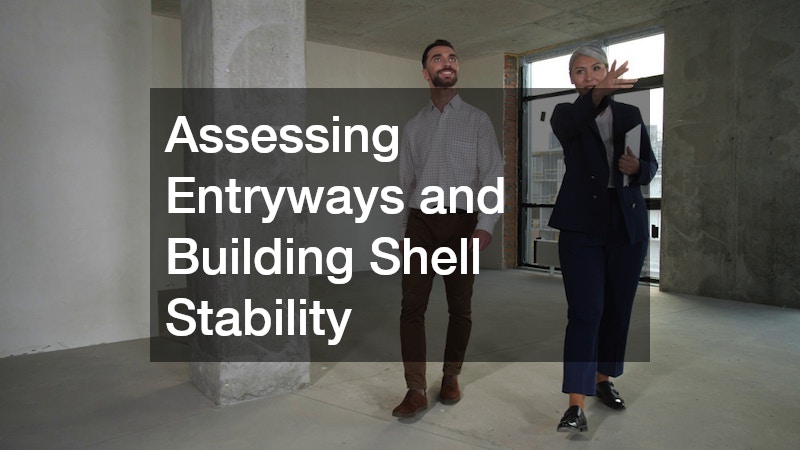
The building envelope protects the interior assets from the elements and ensures the security of the daily operations within. This shell includes the foundation, exterior walls, windows, and main entry points. Inspectors must look for signs of structural settling, such as diagonal cracks in brickwork or gaps around window frames. Particular attention should be paid to the main entry doors, which experience constant cycle use in commercial settings. Misaligned frames, failing hydraulic closers, and cracked panes can compromise both the energy efficiency and the physical security of the facility. When doors fail to seal correctly, it places an unnecessary burden on internal climate systems and exposes the interior to pests and moisture. Identifying these issues early allows buyers to factor the cost of commercial glass door repairs into their final purchase negotiations. Beyond entry doors, the condition of the exterior sealants and expansion joints must be evaluated. Over time, exposure to ultraviolet radiation and temperature fluctuations causes caulking to dry out and split, creating pathways for water intrusion. Addressing these envelope vulnerabilities before taking ownership prevents moisture from rotting internal wall cavities and creating mold hazards that are costly to remediate. Ensuring a tight perimeter remains paramount for asset preservation.
Examining Roof Systems and Weather Barriers
A commercial roof is undoubtedly one of the most critical and expensive components of any facility infrastructure. A failing roof can cause widespread damage to inventory, expensive machinery, and internal finishes, making a rigorous roof inspection a top priority during due diligence. Buyers should hire an independent inspector to evaluate the age, material condition, and remaining useful life of the roof membrane. The inspector will look for blisters, open seams, punctures, and evidence of ponding water, which indicates poor drainage. If minor localized issues are found, the buyer must estimate the immediate costs of commercial roof repair to ensure the building remains watertight through the transition period. However, if the roof is approaching the end of its typical lifespan but the underlying structure remains sound, a full replacement might not be immediately necessary. In many cases, applying a high-quality commercial silicone coating can restore the roof’s integrity at a fraction of the cost of a total tear-off. This liquid-applied membrane creates a seamless, durable barrier that reflects solar heat and cures into a waterproof shield, effectively extending the roof’s operational life by decades. Understanding these options during the due diligence period allows buyers to negotiate appropriate capital expenditure credits from the seller.
Evaluating Interior Finishes and Floor Slabs

Moving inside the facility, the structural integrity of the interior slabs and the durability of the flooring demand close scrutiny. The choice of flooring impacts everything from daily maintenance expenses to operational safety and compliance with industry regulations. In manufacturing plants, warehouses, and commercial kitchens, the floors must withstand heavy vehicular traffic, chemical spills, and rigorous sanitation protocols. Inspectors should check the concrete slab for major structural cracks, uneven expansion joints, and signs of moisture vapor transmission, which can ruin standard floor coverings. For industrial and commercial environments that require a hygienic, impact-resistant surface, installing heavy-duty epoxy flooring is often the preferred choice. This seamless material seals the concrete substrate, prevents chemical absorption, and provides an easy-to-clean surface that enhances safety through slip-resistant textures. If the existing interior floors are peeling, cracked, or stained, the buyer must calculate the cost of grinding down the old substrate and applying a new protective system. Additionally, internal walls, ceilings, and insulation barriers must be checked for water stains or structural shifting, which could indicate unresolved leaks from upper levels or exterior walls that require immediate remediation before interior build-outs can begin.
Auditing Plumbing and Mechanical Assets
The internal utility infrastructure of a commercial building operates largely out of sight, but its failure can paralyze an entire operation within hours. The plumbing system, including water supply lines, waste disposal systems, water heaters, and grease traps, requires an exhaustive evaluation. Buyers should demand a comprehensive camera inspection of the main sewer lines to check for root intrusion, pipe sagging, or structural collapses that could lead to catastrophic backups. Hiring a commercial plumber to conduct a pressure test on the water supply system can reveal hidden leaks behind walls or beneath the concrete slab that waste thousands of gallons of water monthly. Furthermore, the inspection must verify that backflow prevention devices are installed, certified, and compliant with local municipal codes to protect the potable water supply. Water heating equipment must also be evaluated for storage capacity, recovery rates, and signs of tank corrosion or scale buildup. For specialized facilities like restaurants or laboratories, the complexity of the fluid management systems increases exponentially, requiring detailed verification that all specialized traps, interceptors, and neutralizers are fully operational, thoroughly cleaned, and properly maintained to avoid compliance issues.
Analyzing Climate Control and Ventilation

The comfort of employees, the preservation of temperature-sensitive inventory, and the overall indoor air quality depend entirely on the building’s climate control systems. Commercial heating, ventilation, and air conditioning units represent a massive capital investment and carry high monthly operational costs. Buyers must review the complete maintenance history of all rooftop units, split systems, and exhaust fans. It is critical to partner with a qualified HVAC company to perform a comprehensive diagnostic check on each unit, measuring compressor efficiency, refrigerant charge levels, and electrical draw. If the units are older or have been poorly maintained, they will consume excessive energy and face an elevated risk of sudden component failure. The inspection should identify any immediate AC repair needs, such as replacing burnt-out fan motors, fixing failing compressors, or sealing leaky ductwork that diminishes cooling efficiency. In tandem with equipment checks, the inspection team should evaluate the building’s automated climate control systems and thermostats to ensure they can be programmed for maximum energy savings during unoccupied hours. Discovering that multiple units are on the verge of breakdown gives the buyer powerful leverage to request price concessions or require the seller to perform necessary repairs before the closing date.
Final Synthesis and Post-Acquisition Planning
After compiling the data from every physical inspection, administrative review, and environmental report, the acquisition team must synthesize the findings into an actionable plan. This final step transforms a massive collection of individual observations into a cohesive financial and operational strategy. The due diligence checklist concludes with the creation of a capital expenditure roadmap that prioritizes repairs based on urgency and impact on business continuity. Immediate life-safety issues and structural vulnerabilities must be addressed before occupancy, while minor aesthetic updates can be deferred to future budget cycles. Buyers should use the gathered intelligence to refine their financial models, updating their projected return on investment to account for the actual condition of the property. If the total cost of immediate repairs exceeds the initial estimates, the buyer can confidently re-enter negotiations with the seller, backed by objective engineering and contractor reports. At its core, a thorough due diligence process eliminates the element of surprise from commercial real estate transactions. It empowers buyers to take ownership of a new property with total clarity, knowing exactly what assets they possess, what liabilities they must manage, and how to allocate their resources effectively to ensure long-term operational success.